Key Differences Between Khalkha And Inner Mongolian Dialects

Author
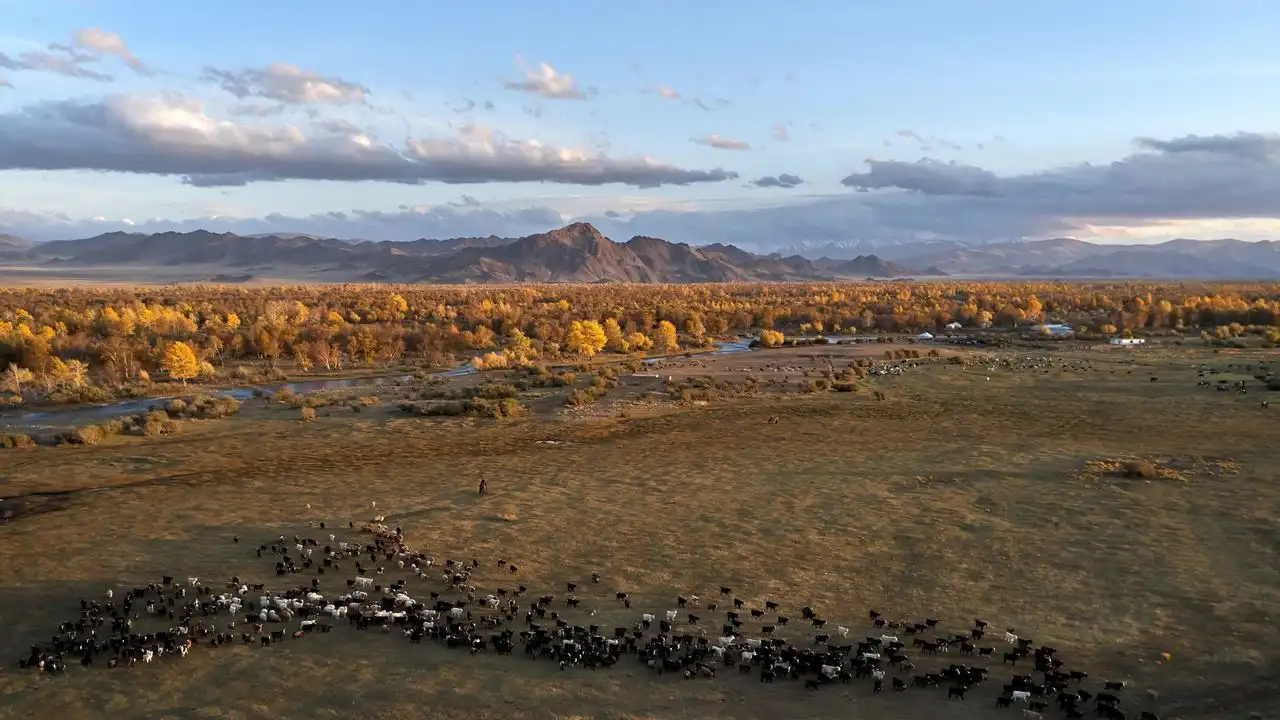
Mongolian is spoken across a vast region spanning the independent country of Mongolia and Northern China.
The two main language varieties you’ll encounter are Khalkha and Inner Mongolian.
Khalkha is the official spoken standard of Mongolia.
Inner Mongolian dialects are spoken in the Inner Mongolia Autonomous Region of China.
While speakers of both can easily communicate, there are distinct differences between them.
Table of Contents:
Writing systems and scripts
The most obvious difference between Khalkha and Inner Mongolian is how they’re written.
Mongolia adopted the Cyrillic alphabet in the 1940s.
If you study Khalkha Mongolian, you’ll learn to read and write using letters that look like Russian.
Inner Mongolia still uses the Traditional Mongolian script.
This ancient alphabet is written vertically from top to bottom, and read from left to right.
This creates a huge visual barrier between the two regions.
A person from Mongolia and a person from Inner Mongolia can speak to each other perfectly.
However, they often can’t read each other’s local newspapers.
Vocabulary and foreign loanwords
History has shaped the modern vocabulary of both regions.
During the 20th century, Mongolia had close ties with the Soviet Union.
Because of this, Khalkha Mongolian uses many Russian loanwords for modern everyday concepts.
Inner Mongolia is part of China, so its modern vocabulary is heavily influenced by Mandarin Chinese.
In many cases, Inner Mongolian also preserves older, traditional Mongolian words that Khalkha replaced with Russian terms.
Here’s a comparison of how everyday words differ based on loanwords.
| English | Khalkha Mongolian | Inner Mongolian |
|---|---|---|
| Beer | Пиво (Pivo - Russian origin) | Шар айраг (Shar airag - Traditional) |
| Movie | Кино (Kino - Russian origin) | Ший (Shii - Chinese origin) |
| Train | Вагон (Vagon - Russian origin) | Гал тэрэг (Gal tereg - Traditional) |
| Ice cream | Морожин (Morojin - Russian origin) | Мөхөөлдөс (Mökhööldös - Traditional) |
Pronunciation and sounds
The spoken accents sound different due to a few consistent pronunciation shifts.
The most common sound difference involves the “ts” and “ch” sounds.
Many words that start with a hard “ts” in Khalkha are pronounced with a softer “ch” in Inner Mongolian.
A perfect example of this is the word for tea.
Цай
In Inner Mongolia, this exact same word is pronounced as “chai”.
Khalkha Mongolian also tends to drop short, unstressed vowels at the end of words.
Inner Mongolian speakers pronounce these ending vowels much more clearly.
This makes spoken Inner Mongolian sound slightly closer to written Traditional Mongolian.
Grammar and dialect variations
Both varieties share the exact same core grammar.
Sentences follow a Subject-Object-Verb word order in both regions.
The primary grammar differences are found in casual slang and conversational particles.
It’s also important to note that Inner Mongolian isn’t just one single dialect.
It’s a collection of several regional dialects like Chakhar, Baarin, and Khorchin.
Chakhar is considered the standard pronunciation for broadcast media in Inner Mongolia.
Khalkha is highly uniform and standard across the entire country of Mongolia.
If you learn Khalkha, you’ll just need a few weeks of listening practice to fully adjust to the Inner Mongolian accent.